A holiday party outfit is the dress code read in length and fabric, then one change to what you already wear. Festive means a cocktail dress or dressy separates with a nod to the season, so a hem at the knee to mid calf, or a tailored trouser with a good top. An office party means what you wore to work with one swap. A dinner means the dress. Choose fabric with weight, put shine in one place, and if you are 5 ft 4 in (163 cm) or under, check the hem and the waist seam in the party shoes before the first week of December, which is when Google Trends shows searches for this outfit peak every year.
Read the invitation before the wardrobe
An invitation says festive, cocktail or smart casual, or it says nothing. Take each in turn. The Emily Post Institute's attire guide has an entry for festive, headed for the holidays: "A festive dress code is often the choice for holiday or New Year's parties. It's essentially cocktail party attire with a seasonal and festive holiday touch." Its list for women is a cocktail dress, a long dressy skirt and top, a dressy trouser outfit or separates, a little black dress, and the colours of the season. In length that is the knee to mid calf, or a trouser, and the black dress you own already qualifies.
An invitation says festive, cocktail or smart casual, or it says nothing.
Emily Post's guide has no heading called cocktail attire. The cocktail dress appears inside its other codes, as "Short afternoon or cocktail dress" under semi formal and "Dressy cocktail dress" under black tie. Our reading, which matches our winter wedding guide, is that cocktail means the knee to mid calf in a fabric with weight, and festive is the same hem with shine allowed.
For dressy casual, Emily Post lists a dress, a skirt and dressy top, a dressy trouser outfit, or "Nice jeans and dressy top". So a house party that says nothing is the good jeans and a top you are proud of, and when the invitation says nothing at all, our rule is to dress one step above the room: a kitchen party one step above a weekday, a restaurant dinner one step above that.
Fabric and shine: one of each
Fabric first, because a party can mean hours of standing and the fabric has to hang at the end of it. Wikipedia describes velvet as a woven fabric with "a dense, even pile". Crepe is a silk, wool or synthetic fabric with a crisp, crimped surface. Satin is a weave rather than a fibre, "with a glossy top surface and a dull back". In our view all three hang through a long evening when they are lined, while thin jersey clings more the longer you wear it and an unlined sequin fabric shows every seam underneath.
Shine lives in one place. That is our rule for every December outfit, set out in the New Year's Eve guide: satin on the body, gold at the ear, or a metallic shoe, never two. A sequin is, in Wikipedia's definition, "a small, typically shiny" ornament, and a dress made of them is shine over the whole body, which leaves nothing for the ear or the shoe. Our recommendation: sequins as one top over a plain trouser, or as an earring, and never the whole dress unless the invitation says festive.
The office party: what you wore to work plus one change
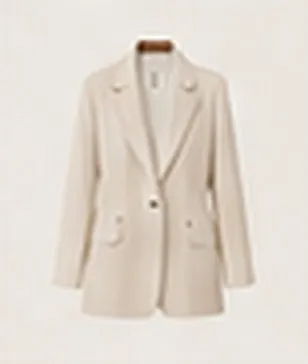
The office party is the one you cannot go home to change for, so the answer is the outfit you wore to work with one swap made at six. The blazer stays. The Cato Tailored Blazer is cut shorter in the body and higher in the armhole so it ends at the hip bone, with a single button at the natural waist, fully lined, in a wool blend. Our blazer edit has the check: hold your hand flat at your hip. If the hem sits below your fingers, the jacket is doing you no favours.
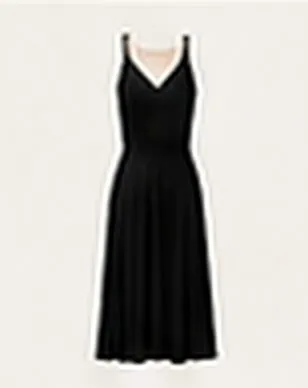
The swap is underneath. Change the work knit for the Ines Square Neck Top: long sleeves, a square neck, a close fit and a double layered front, in a stretch jersey that holds its shape through the day. Or wear the Rhea Slip Dress under the Nell Knit Top, so at the desk the satin reads as a skirt line and at the party the knit comes off. The Rhea is bias cut with a V neckline, adjustable straps, a satin finish and a full lining. Bias is why it behaves: Wikipedia's entry on fabric grain says woven fabric is "more elastic as well as more fluid in the bias direction", so the dress drapes softly instead of holding still. More of both are in going out tops and slip dresses.
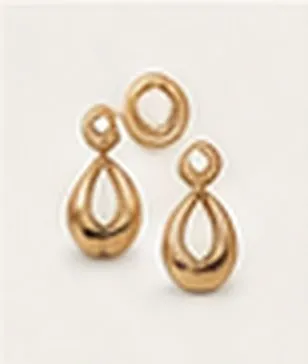
Hem at the knee or below, since it is still the office. Shine at the ear only: the Ora Drop Earrings are a sculptural double drop in 18k gold plated brass, nickel free, with a 2 inch drop.

A friend's party: separates you can stand in
A friend's house means a floor you do not know, a coat pile and standing all night, so the shoe decides the outfit. Pick the shoe you can stand in for four hours and build upwards from it.
The first formula is the Sena Wide Leg Trouser with the Ines. The Sena is high waisted with a pressed crease, a side zip and a hook and bar closure, in a viscose blend, with a 28 inch (71 cm) inseam in size S, cut to skim the floor in a flat shoe. The trouser length guide wants half an inch of clearance in the shoes you wear most, so the party shoe for the Sena is a flat or a low block heel. For a 3 inch heel, the New Year's Eve guide shows the working: as an estimate, a heel lifts a floor skimming hem by close to its own height, so a pair set in flats wants a second pair hemmed for that shoe.
The second is the Birk Straight Leg Jean with the Elia Rib Tank, a fine cotton blend rib with a square neck and a high back, and the Cato over it. The Birk is a mid blue high rise straight leg in rigid denim with a little give, 99% cotton, with a 27 inch (69 cm) inseam in size S and a hem that grazes the top of the foot. The jean length guide has the rule: no break, one soft fold across the front is fine, two means they are long. The order is the one from tops that don't overwhelm: the layer closest to you the most fitted, volume outwards.
A dinner or cocktail party: the dress
A dinner is mostly sitting, so the dress has to hang when you stand up again. The Marlowe Midi Dress is a square neck midi in heavy crepe with wide straps, a defined waist and a fluid skirt, fully lined, with an invisible back zipper. The Vela Open Back Midi has long sleeves and a soft shoulder, a covered front and a deep open back crossed by a single strap, in heavy stretch crepe with a concealed side zip. The sleeves do the blazer's job, so the back is the only event. Both are on dresses, and the black ones sit in black dresses.
Length: just below the knee or mid calf, and never the widest part of the calf, which our trouser guide names as the one length to avoid. Then the waist. Our wedding guest guide puts it in one line: "A midi is really a maxi if the waist sits in the wrong place." The seam goes at your natural waist, where your body bends.
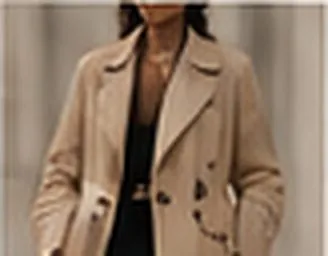
One bag and one earring. The Lune Shoulder Bag, soft grain leather with a 9 inch strap drop, sits under the arm all night, and the Ora goes at the ear. Over it all, the Lior Trench Coat "Hits just above the knee", in its product page's words, double breasted with a removable belt in a cotton blend, so the dress hem shows below the coat and the dress keeps its own line.
If you are 5 ft 4 in or under
Everything above holds at any height. What changes is where the lines land. Wikipedia defines a petite size as one "designed specifically for women 163 cm (5 ft 4 in) and under", and at NYDJ and Wintergreen the petite inseam is about 2 inches (5 cm) shorter than the regular one. NYDJ's inseam guide puts petite at 28 to 30 inches against regular at 30 to 32. Wintergreen Northern Wear's chart puts a size 4 at a 30 inch inseam and a 4P at 28, and says "Petite sizes are shorter in the rise and inseam lengths." Our petite sizes guide goes through it garment by garment.
Our rule of thumb is to expect the same order of difference on a dress. A regular midi cut to end at mid calf on the fit model lands about 2 inches lower on you, nearer the ankle. Wiktionary defines a midi as having its hemline at mid calf, so on your body that dress has become something else. Check mid calf in the party shoes, not barefoot.
The waist seam is the first check in the changing room, before the hem. Our alteration tips are blunt: "Hems, sleeves and waistbands are simple and inexpensive to adjust. Shoulders, armholes and rises are not, so prioritise those when you shop." In our view a waist seam is the harder fix: a hem comes up, but a waist seam that sits at your hip is best chosen right in the shop.
The sleeve is the cheap one. In our view, a sleeve that covers your hand with your arms hanging is too long for you. Our rule of thumb is that the cuff ends at the wrist bone, and a sleeve is one of the simple, inexpensive alterations. Shine takes a bigger share of a shorter frame, in our view, because there is less line to split, so one shine matters more here, not less.
Then the numbers. Our size guide lists an inseam for every size: 27 inches (69 cm) at XXS, 28 inches (71 cm) at S and 29.5 inches (75 cm) at XXL. Lay the trousers you wear most flat, measure from the crotch seam to the hem, and compare before you order. Google Trends puts the peak week for this search at the end of November or the first week of December in each of the last five years, so hems, sleeves and waistbands go to the tailor before that week. Ask the lead time when you book.
Three parties, one wardrobe
Count the pieces. The Cato is at the office and over the Birk at the friend's house. The Ines is at the office and over the Sena. The Rhea is under the Nell on Thursday and on its own on Saturday. The Ora is the one earring across all three nights. Each piece passes the Tuesday test: the Sena and the Ines are what you wore to work the week before, the Marlowe with a flat shoe is a working day, and the Birk and the Elia are the first Monday of January.
Read the code for the hem, then check the hem in the shoes you will stand in. Everything else is one change.