Black tie optional is a formal evening dress code one step under black tie. Emily Post's attire guide says it "gives guests a couple of formal options to choose from": for men a tuxedo or a dark suit, for women a floor length evening gown, a dressy cocktail dress, a little black dress or dressy separates. A floor length dress still reads correctly, and in our view a long midi in a fabric with weight passes almost everywhere now. The word optional relaxes the tuxedo, not the formality, and the place the code is actually read is the hem.
What black tie optional actually means
What does black tie optional mean? The host would like black tie and will not hold it against anyone who cannot manage it. Emily Post lists the men's options as a tuxedo, or a dark suit with a white dress shirt and a conservative tie. Bespoke CB, a Miami tailor writing for men, puts the ladder plainly: black tie optional "is more formal than cocktail attire but less rigid than strict black tie."
What does black tie optional mean? The host would like black tie and will not hold it against anyone who cannot manage it.
For a woman the optional part changes very little. Emily Post's women's list for black tie optional is the same as its list for black tie, a floor length gown, a dressy cocktail dress, a little black dress, with one addition: dressy separates. The code is not asking you to come down a level. It is telling you the room will be formal and giving you a choice of how to meet it.
Black tie, black tie optional, formal and cocktail, side by side
Read from the top down. Black tie means a tuxedo for men, "required, not suggested" as Bespoke CB has it, and for women the gown, the dressy cocktail dress or the dressiest little black dress. Black tie optional keeps the women's list and lets the men choose a dark suit.
What does "formal attire" mean? In our reading, on a wedding invitation it is a softer way of saying black tie optional. Emily Post's attire guide has no heading called formal, but its wedding guest page splits formal into daytime and evening. Formal evening asks women for a "long evening dress or dressy cocktail dress" and men for a tuxedo, "required if invitation states Black tie", or a dark suit. That is the black tie optional list in other words. Formal daytime drops to a "cocktail or dressy afternoon dress", which is why the time on the invitation matters as much as the code. Emily Post's rule: "The wedding invitation and the time of the wedding will be your best guide to its formality."
How dressy is cocktail attire? One step below black tie optional. Emily Post files the cocktail dress under semi formal, beside a little black dress, a long dressy skirt and top, or dressy separates, and adds that after six in the evening "you'll want to err on the side of formality." A cocktail dress can be short. A black tie optional dress, in our view, should not be.
What a woman can wear to a black tie optional event
What can a woman wear to a black tie optional event? Three answers, in order of safety.
A floor length dress in a formal fabric is the first answer. It is Emily Post's first line for both black tie and black tie optional, and it cannot be read wrong.
A long midi in satin, crepe or velvet is the second. The code accepts a dressy cocktail dress, and a midi that ends above the ankle bone in a fabric with weight is the dressiest version of one. Our Marlowe Midi Dress is a square neck midi in heavy crepe, fully lined, with a defined waist and a fluid skirt.
Dressy separates are the third, and Emily Post lists them for black tie optional specifically. A long satin skirt with a fine knit, or a tailored trouser with a silk top, if the fabrics are formal and the line is long.
Fabric does the work the cut gets credit for. In our view, satin, crepe, heavy viscose and velvet hang, and cotton and thin jersey do not read as evening at any length. Our Rhea Slip Dress is a bias cut slip with a satin finish, fully lined.
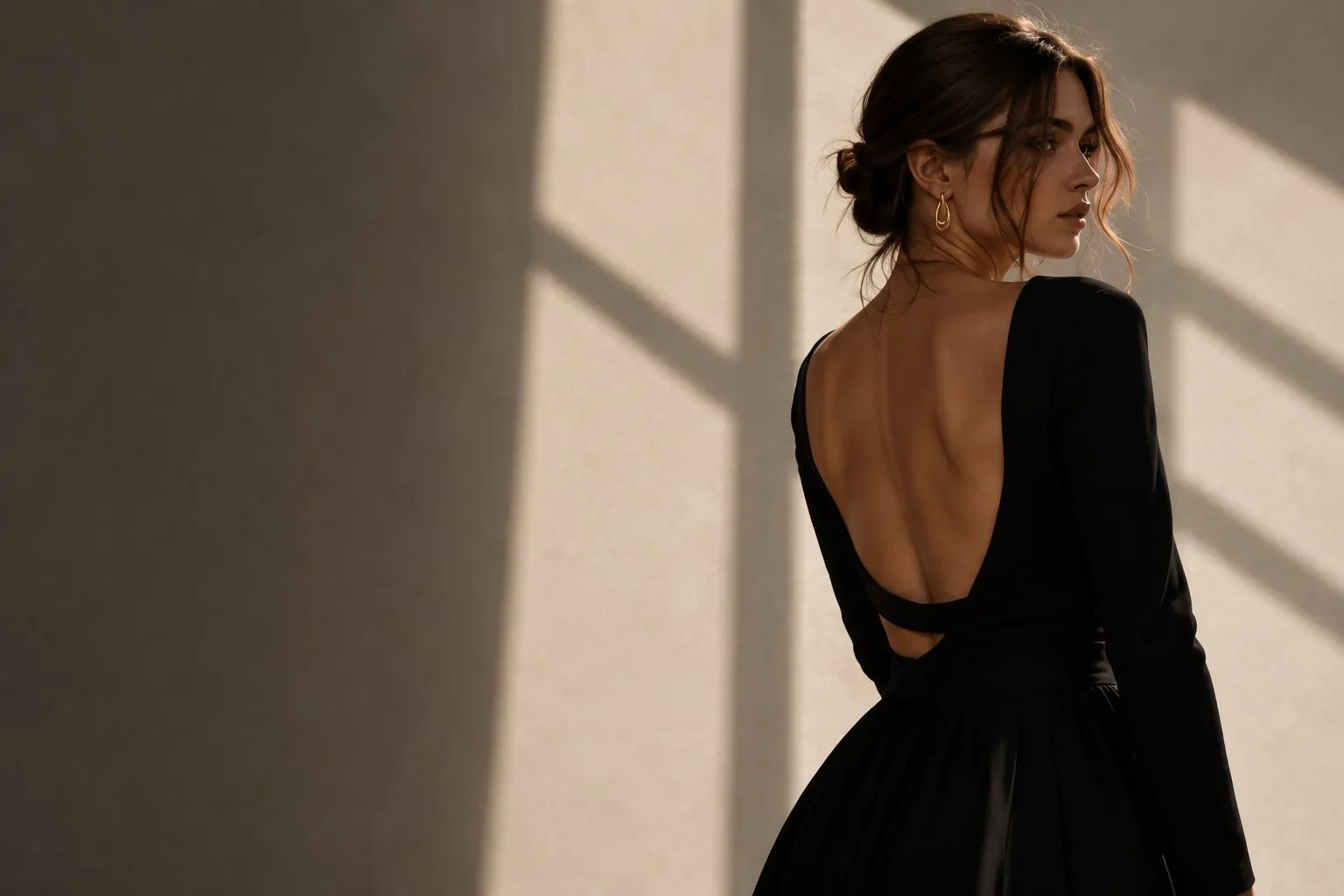
Check the venue's rules on covered shoulders. A long sleeve midi covers them: the Vela Open Back Midi is heavy stretch crepe, covered at the front with long sleeves, and keeps its drama for the back. Where the waist seam should sit and which neckline suits you are in wedding guest dresses that actually fit and the best necklines for every shape.
Length is where the code is actually read
Floor length means the hem reaches the floor in the shoes you will wear, with a little clearance so it does not drag. Azazie's formal dress guide puts the hem "approximately half an inch to one inch above the floor while you're wearing your shoes." Kleinfeld, fitting bridal gowns, aims closer, "about a quarter inch above the ground." For a guest who will walk, sit and dance, the trouser length guide says half an inch (1.3 cm) of clearance keeps the hem clean, and Azazie allows up to an inch (2.5 cm).
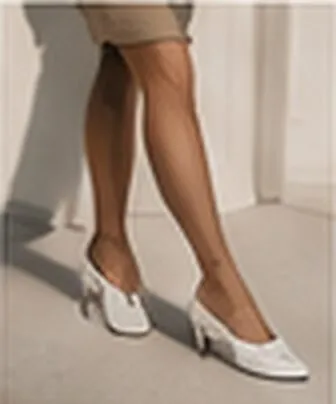
Midi is a looser word. Wiktionary defines it as a hemline at mid calf, and Collins allows anything "reaching to below the knee or midcalf". In our view the label covers everything from just below the knee to just above the ankle, and the two ends do not read the same. Our rule: a midi that stops above the ankle bone reads as evening and passes black tie optional. One that stops mid calf reads as daytime and belongs at cocktail.
The check takes two minutes. Put on the shoes you will wear, stand straight and have someone measure from the floor to the hem. In our check, under an inch means you are floor length. At the ankle bone or just above it, you are a long midi. At the widest part of the calf, you are at what we would call a daytime length and the dress needs either a different event or a different shoe.
If you are petite: does your midi count, and where the long hem sits
Petite is cut for women 5 ft 4 in (163 cm) and under. Wikipedia's definition says petite sizes exist because regular sizes "are often tailored based on the proportions of taller individuals", and NYDJ, which draws the line at the same height, makes its petite jeans "in shorter lengths". For this code that means two things, and our petite sizes guide has the trouser inseam numbers.
First, your midi may already count. On a shorter frame a regular midi can land lower on the leg, so measure where yours ends. In our view an ankle length hem is the length that reads as evening. Put the midi you own on with your evening shoes and find the ankle bone. If the hem is there or just above it, you have a black tie optional dress and did not know it.
Second, a regular floor length dress carries extra inches. On trousers our petite sizes guide puts the gap between a regular and a petite inseam at about 2 inches (5 cm). Dresses vary by brand, so measure rather than guess: shoes on, stand straight, and have someone pin the hem at half an inch off the floor. The fabric below the pins is what comes off.
What comes off decides the cost. Our alteration tips give the rule: "Hems, sleeves and waistbands are simple and inexpensive to adjust. Shoulders, armholes and rises are not." In our view a plain hem is the cheap job, while a border, a lace edge, a full circle skirt or a bias cut slip is a different conversation, and taking them up changes the line, not just the length. Ask the tailor before you buy, not after.
Trains and full skirts are mechanics, not a verdict. Kleinfeld calls the sweep the shortest train and says it "cannot be bustled nor is there a need for one"; Zola puts it at "six inches to one foot" behind the wearer and says longer trains want a bustle when it is time to dance. For a guest, in our view, even a sweep is more hem than the evening needs. In our view a full skirt sits its volume low on a shorter frame, so a fluid skirt that moves, like the Marlowe's, keeps the line longer than a stiff one. And in our view the waist seam matters more than either: on your waist, the dress is long. At your hip, the dress is too big in the body, and no hem fixes that.
Our size guide lists an inseam for every size, 27 to 29.5 inches (69 to 75 cm) across XXS to XXL, because each size has its own inseam. The Marlowe's own bullet says "Midi length, no alterations needed."
Hemming a long dress for heels: the arithmetic
Decide the shoe first. Azazie's guide says it in one line: "Change the shoes, and you've changed the hemline." For the sum, assume the hem moves by the full heel height. Platforms and shoe shapes vary, so always pin in the actual shoes.
Say the dress is hemmed to half an inch off the floor in a 3 inch (7.6 cm) heel. Swap to flats and you drop 3 inches, so the hem does too: half an inch of clearance becomes 2.5 inches (6 cm) of fabric on the floor, and you will carry it all night. Run it the other way and a dress hemmed for flats sits 3.5 inches (9 cm) off the floor in those heels, which shows the whole shoe and reads as a midi you did not choose.
So pick one of two plans. Hem for the heels and carry the flats for the taxi home, which we recommend if you can stand in the heels through the ceremony. Or hem for a low block heel you can wear all night, and accept that higher heels are out for that dress. Either way, pin standing straight, in the shoes, on a hard floor, and let the tailor pin rather than guess. Kleinfeld asks brides to bring the wedding day shoes to the first fitting "so your seamstress can complete your hem", and the same applies to a guest.

Colour, and the wording on the invitation
Black is correct. Azazie's guest etiquette guide says black is now widely accepted for formal and evening weddings and calls it "not only appropriate but encouraged" at black tie events, with the caveats of a traditional church ceremony, some cultural weddings and casual daytime events. White is not: the same source says to "never wear white, ivory, cream, ecru, pearl, champagne, or pale beige to a wedding", because white "is reserved exclusively for the bride in Western weddings." Keep the shine to one place. Our Ora Drop Earrings are a 2 inch drop in 18k gold plated brass, which is enough.
Three phrases near black tie optional mean slightly different things. Black tie preferred leans harder: Bespoke CB reads it as "The host wants you in a tuxedo but acknowledges that some guests may not have access to one", so for a woman, lean towards floor length. Black tie invited appears in neither Emily Post nor Bespoke CB; our reading is that it sits with black tie optional, a polite request rather than a rule. Creative black tie, in Emily Post's guide, keeps the black tie list and adds "fun or unique accessories", so the formality stays and the colour and texture open up.
Is there a hyphen in black tie optional? Not in the noun. Wiktionary and Dictionary.com both spell the noun as two words and hyphenate only the adjective, the form that sits before a word like event or function. Emily Post's heading is Black Tie Optional, three plain words, and that is the form to copy.
How do you say black tie is optional? Print the code as the invitation did, Black Tie Optional, with the time. A host who wants to be kinder can add a plain line: a tuxedo or a dark suit for men, a long dress or a dressy cocktail dress for women. A guest who needs to ask should ask the question that matters: is floor length expected, or is a long midi fine. If the answer is a long midi, you have your answer.
Black tie optional is a question about the hem, not the tie, and the hem is the one thing you can measure before you leave the house.