A petite dress is cut shorter in the bodice and the shoulder as well as the skirt, and the figures are small: Nobody's Child takes 2 cm out of the bodice, 1 cm off the shoulder width and 8 to 10 cm off a midi or maxi. In our view, a P on a size tag does not say what changed. Here are the things to read on a listing before you buy a petite dress online, in order, and the one alteration worth paying for once it arrives.
What the petite label changes on a dress
Petite is a height band before it is anything else. Wikipedia defines a petite size as one "designed specifically for women 163 cm (5 ft 4 in) and under" and adds that the category "takes into account the proportions of her body". Brands draw their own line beneath that. Princess Polly puts its petite range at 5 ft 2 in and under, and lists a shorter torso, shorter legs and narrow shoulders as the other reasons to try it. Nobody's Child designs its petite range for women between 4 ft 11 in and 5 ft 3 in (150 to 160 cm).
Petite is a height band before it is anything else.
Nobody's Child also publishes what its petite grade does, and the figures are the useful part. Against the regular fit, shoulder width is reduced by 1 cm, bodice length from side neck to waist by 2 cm, mini dresses by 5 cm, and midi to maxi dresses by 8 to 10 cm depending on the style. In inches that is 0.4 off the shoulder, 0.8 off the bodice, 2 off a mini and 3.1 to 3.9 off a midi or maxi. Trousers follow the same pattern at about 2 inches (5 cm): Wintergreen Northern Wear's chart puts a size 4 at a 30 inch inseam and a 4P at 28, and NYDJ's inseam guide gives petite 28 to 30 inches against regular 30 to 32.
Look at where the small numbers sit. Two centimetres out of the bodice is the difference between a waist seam on your waist and one below it. Quince describes its petite patterns as graded with "shorter inseams, shorter sleeve lengths, and proportionally shifted waist, bust, and shoulder points". Take the hem up on a regular dress and only the hem moves. The waist seam, the bust shaping and the shoulder seam stay where the pattern put them, which is why a shortened regular dress and a petite dress in the same size do not sit the same way. What petite changes on trousers, jackets and knits, and how a 4P relates to a 4, is in petite sizes explained.
Read the listed length and the model
The first thing to find on a listing is a garment length: a measurement from the high point of the shoulder to the hem, with the size it was taken on. The second is the model's height and the size she wears. A listing that gives neither cannot be checked, and in our view that is the moment to keep scrolling.
To use a listed length you need one of your own. Take a dress that ends where you like it, lay it flat and zipped, and measure from the shoulder seam, where the strap or sleeve meets the body, straight down to the hem. That is your reference length. A listed length within an inch of it, on a size near yours, will land close to where your own dress does. One that is 3 inches longer will land about 3 inches lower, whatever the listing calls the style.
Model height is the rougher tool. Our rule of thumb: the hem sits lower on you by about the difference between your height and hers, give or take where each of you carries it, in the leg or the torso. By that rule, a dress photographed at mid calf on a model 5 inches taller than you is heading for your ankle. In our view, mini, midi and maxi describe how the dress sits on the model, not where it will land on you.
The bodice decides the hem
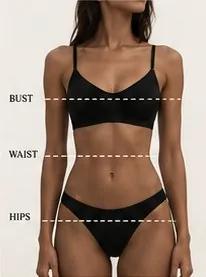
The third thing to read is how the listing describes the waist, because the bodice decides where the skirt starts and therefore where it ends. "Defined waist" or "waist seam" means a horizontal seam built to sit on your natural waist, which our how to measure page takes as "the narrowest point". An empire line is a different intention: Wikipedia describes it as "a fitted bodice ending just below the bust". A drop waist is another, which Wikipedia puts "near the level of the upper hips". Both can work on a shorter frame. Our wedding guest guide allows them "but only if the seam is where your body actually bends".
Nobody's Child measures its bodice from side neck to waist, and you can do the same. Run a tape from the side of your neck, where a shoulder seam would begin, down to your natural waist. If the listing gives a bodice length, compare. If a dress arrives with its waist seam at your hip, in our view it is usually a dress cut for a longer torso rather than a long dress, unless it is meant as a drop waist. The wedding guide's line applies: "A midi is really a maxi if the waist sits in the wrong place."
Four cuts, and what to check on each
A bias slip. Read for three things: adjustable straps, a lining, and a fabric with some weight. The strap is the length control, because shortening it raises the whole dress by the same amount, hem and neckline together. Our slip dresses are cut on the bias in a fabric with enough weight to move with you, fully lined, with straps that adjust, and the collection page is blunt about the alternative: a thin unlined slip will catch on tights and show everything.
A square neck midi. Read for strap width, a stable fabric and a zip. Our neckline guide has the one rule that matters: the seam should sit flat against your skin without gaping, and if it gaps the garment is too wide through the chest, not too big overall. In our view a zipped bodice is the one to trust for a defined waist, because the waist is cut to a measurement rather than relying on stretch to find it.
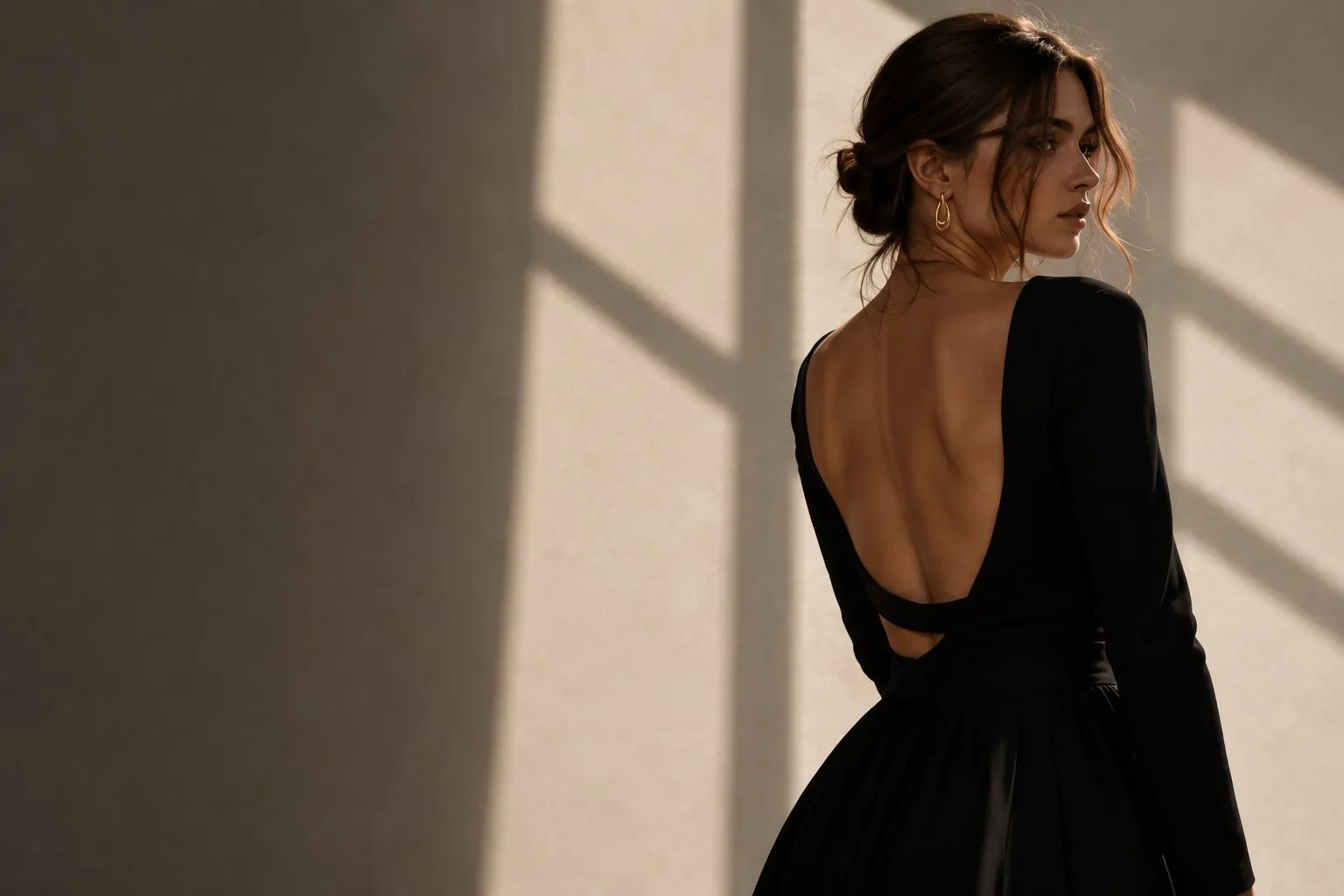
An open back. Read for the strap across the back before the depth of the opening. Our open back dresses page puts it first: the strap or tie keeps the dress where it should sit and lets you move without adjusting it. Most open backs need a stick on bra, or nothing at all if the dress is lined and cut close, and a strap across the back, like the one on our Vela, lets a low back bra work too.
A long sleeve. Read for the shoulder. Our tops guide wants the shoulder seam to "land on your shoulder bone", and our outerwear guide says to "check the shoulder before anything else" because "sleeves and hems are easy and cheap to shorten, shoulders are a rebuild". Our rule of thumb for the sleeve itself is the wrist bone.
Which dress cut is easiest to fit if you are petite? In our view the bias slip with adjustable straps. It has no waist seam to land in the wrong place, the strap moves the whole dress, and the hem is the only alteration it might ever need. The square neck midi with a defined waist is the hardest to buy without trying, and the best once the bodice is right.
Fabric weight and lining, from the listing
Read the fibre, the word lined, and whether the fabric has stretch. In our view weight is what lets a skirt hang rather than cling. A heavy crepe holds a waist seam and falls straight from it, which is why our Marlowe is cut in one and our Vela in a heavy stretch crepe. A satin cut on the bias skims and moves, which is the point of our Rhea. Our slip dresses page gives the two word answer to a slip that clings: weight and lining. A lining stops the skirt catching on tights and lets it fall clean over whatever you wear underneath, and a listing that says fully lined is telling you the dress was built to hang.
What a tailor can fix after it arrives
Can a tailor make a regular dress petite? Only partly, and the Nobody's Child figures show which part. Our alteration tips give the rule: "Hems, sleeves and waistbands are simple and inexpensive to adjust. Shoulders, armholes and rises are not, so prioritise those when you shop." On a dress that means the 8 to 10 cm in the skirt is the part a tailor can take up, and the 2 cm in the bodice and the 1 cm in the shoulder are the parts she will leave alone, because in our view moving a waist seam means recutting the bodice above it. In our view, straps sit with the hem on the cheap side.
One caveat for a slip. Seamwork's guide to sewing bias cut garments says to "hang those pieces for at least 24 hours before doing your final hemming", so that "the bias will relax and find its natural drape". Sewing.org's bias basics give the same twenty four hours. A bias hem is a job for a tailor who will hang the dress first, not for a weekend with pins. So: buy for the shoulder and the bodice, pay for the hem, and return anything whose waist seam sits where it should not.
How we cut ours
We do not use a P. Our size guide runs XXS to XXL and lists an inseam for every size, 27 inches (69 cm) at XXS to 29.5 inches (75 cm) at XXL, so the length the petite label stands for on trousers is printed on the chart rather than hidden behind a letter. Every dress page lists its fabric, and its closure where it has one. Where a dress is lined or its straps adjust, the page says so.
The Marlowe Midi Dress is a square neck midi in a heavy crepe with wide straps, a defined waist and a fluid skirt, an invisible back zipper and a full lining, and its page says "Midi length, no alterations needed". The Vela Open Back Midi is the covered version: long sleeves, a soft shoulder, a deep open back with a strap across it, a concealed side zip, heavy stretch crepe. The Rhea Slip Dress is bias cut with a V neckline, adjustable straps, a full lining and a satin finish. All three are on dresses.
Buy the dress for the two centimetres a tailor cannot move, and pay her for the ten she can.